ADVANCED MATERIALS & AEROSPACE TECHNOLOGY

Build what’s next.
Make it perform.

An advanced materials and aerospace company connecting materials science, electronics, and systems engineering.

We help aerospace and defense teams develop, protect, and evaluate demanding hardware. Our work spans materials, EMI/EMC, systems integration, and qualification support—with research reaching toward next-generation aerospace and propulsion technology.

TULSA, OKLAHOMA / FROM MATERIALS TO MISSIONS

Material study · Conceptual imagery

01 / HOW WE HELP

What are you ready
to develop or resolve?

Bring us a new hardware concept, a material challenge, or a program that needs specialist support. Start with a focused review or scope a broader development and evaluation effort.

Connected disciplines.
Better-informed decisions.

Requirements guide the work. Findings feed back into material and design choices.

Application requirements connect materials, components, integrated systems, and verification in a loop. Verification findings inform the next material and design choices.
01EMI/EMC & ELECTRONICS

Control interference.
Strengthen your design.

Design electromagnetic compatibility into new hardware or investigate a test finding. We help work through coupling, grounding, shielding, and integration choices before defining how to verify them.

  • Architecture, grounding, bonding, and shielding reviews
  • Filtering, coupling paths, and signal integrity
  • Test findings and corrective-action planning
TYPICAL DELIVERABLES

Prioritized findings, mitigation options, and a verification plan.

What we would review
Available schematics, interface and harness information, operating modes, requirements, and test reports. We agree on the investigation scope and required specialist support before work begins.
Discuss an EMI/EMC issue
02MATERIALS & PROTECTION

Develop the right
material approach.

Balance protection, weight, electrical behavior, and processing needs. We help evaluate existing materials and scope application-led development when the available choices leave a gap.

  • Coatings, adhesives, sealants, and potting
  • Shielding and thermal-protection approaches
  • Substrate compatibility, coupons, and process trials
TYPICAL DELIVERABLES

Candidate comparisons, application considerations, and an evaluation plan; coupon or process trials can be included in the scope.

What we would review
Your operating environment, substrates, material data, manufacturing constraints, and acceptance criteria. Development work is scoped around the properties and process conditions the application actually requires.
Discuss a materials challenge
03TEST & QUALIFICATION

Build a path
to qualification.

Plan verification early, prepare for an upcoming test, or work through the findings. Connect requirements to the evidence your hardware needs and make each test responsibility clear.

  • Requirements and verification planning
  • Readiness reviews and test coordination
  • Results interpretation and issue resolution
TYPICAL DELIVERABLES

A requirements-to-test matrix, readiness gaps, and defined test responsibilities.

What we would review
Applicable requirements, hardware configuration, existing evidence, and the test schedule. Specialized facility testing is coordinated with appropriate external laboratories; responsibilities and acceptance criteria are identified in the scope.
Discuss a qualification milestone
04SYSTEMS & INTEGRATION

Connect materials,
electronics, and systems.

Developing capable hardware means getting the interfaces right. We help connect architecture, packaging, thermal considerations, electronics, and embedded systems around your requirements.

  • Architecture and interface reviews
  • Ruggedization, packaging, and thermal integration
  • Embedded systems and lifecycle considerations
TYPICAL DELIVERABLES

Documented design tradeoffs, interface findings, and an integration or prototype-development plan.

What we would review
System requirements, interfaces, operating modes, packaging constraints, and known issues. We identify the disciplines needed for the assignment and the work that can be completed within the agreed scope.
Discuss an integration problem

02 / WORK & TECHNICAL EVIDENCE

A closer look
at the work.

Useful materials begin with an understanding of how processing shapes performance. Explore our internal research and an example of how we structure a customer evaluation.

DELTAX INTERNAL RESEARCH

Understanding how processing
affects gel integrity.

Our internal materials research examines how preparation, curing, and drying affect polymer-gel formation and integrity. Experimental records track shrinkage, cracking, and handling behavior to guide the next questions.

THE QUESTION

How do preparation and drying choices affect the resulting specimen?

THE WORK

Record process history and the visible condition of samples across experimental runs.

THE VALUE

A basis for investigating failure modes and defining what the next experiment should examine.

Current stage: precursor-material process studies. Functional performance remains to be established through testing.

Source: DeltaX internal RF-gel experimental records, consolidated June 2026.

ILLUSTRATIVE ENGINEERING DELIVERABLE

A coating decision starts
with the right criteria.

A scoped materials evaluation can make candidate choices, missing information, and test responsibilities explicit.

PROTECTIVE COATING EVALUATIONExample outline
  • 01
    Define the environment

    Temperature profile, moisture exposure, and the protection objective.

  • 02
    Check the interfaces

    Substrate, surface preparation, adhesion, masking, and electrical-contact needs.

  • 03
    Compare the options

    Candidate properties, process constraints, tradeoffs, and evidence gaps.

  • 04
    Plan the evaluation

    Representative coupons, comparison baseline, agreed criteria, and test ownership.

Illustrative evaluation outline. Test criteria and material recommendations are established for each application; no customer results are shown.

PRIOR ACADEMIC RESEARCH · MATTHEW BAMIDELE

Materials fabrication, characterization,
and surface treatments.

Oklahoma State University’s research profile describes Matthew’s work on perovskite semiconductors, including material composition and surface treatments for solar-cell stability.

Read the OSU research profile

03 / RESEARCH & VISION

The next material.
The next mission.

New aerospace possibilities begin at the material level.

Our ambition is to develop advanced materials, protective systems, and aerospace hardware—and ultimately new ways to propel small spacecraft.

That means investigating how materials are made, how they behave, and how they can be integrated into a useful system. Research collaborations start with a defined technical question and milestones that make progress measurable.

Explore a research collaboration
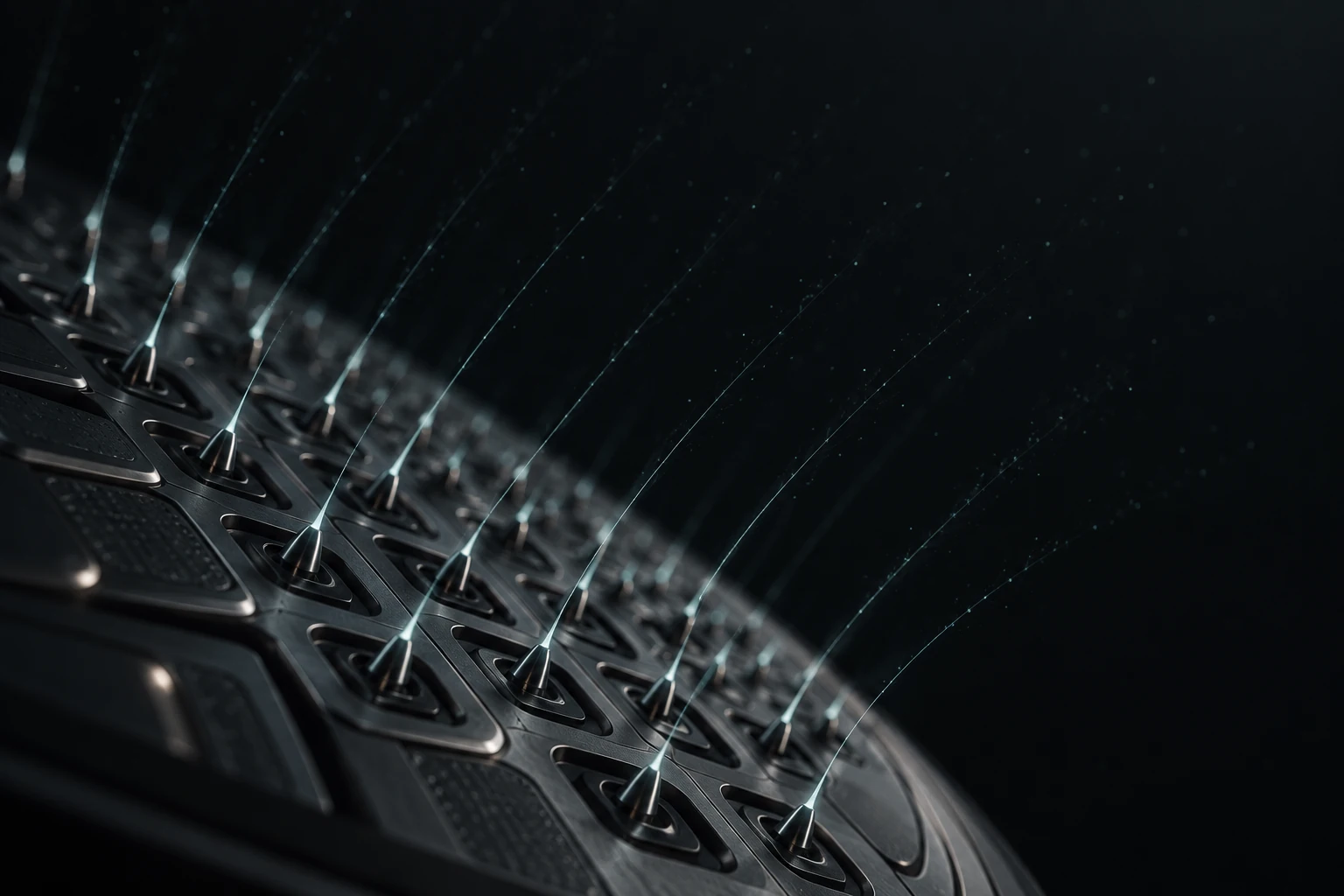
Artistic concept of a dark micro-emitter array with fine cyan trajectories extending into space.
PROPULSION RESEARCH · CONCEPTUAL IMAGERYAn artistic exploration of an emitter array for future electrospray research.
Conceptual illustration of an irregular porous carbon aerogel network with connected branching structures and open voids.
CONCEPTUAL ILLUSTRATION

Carbon aerogels

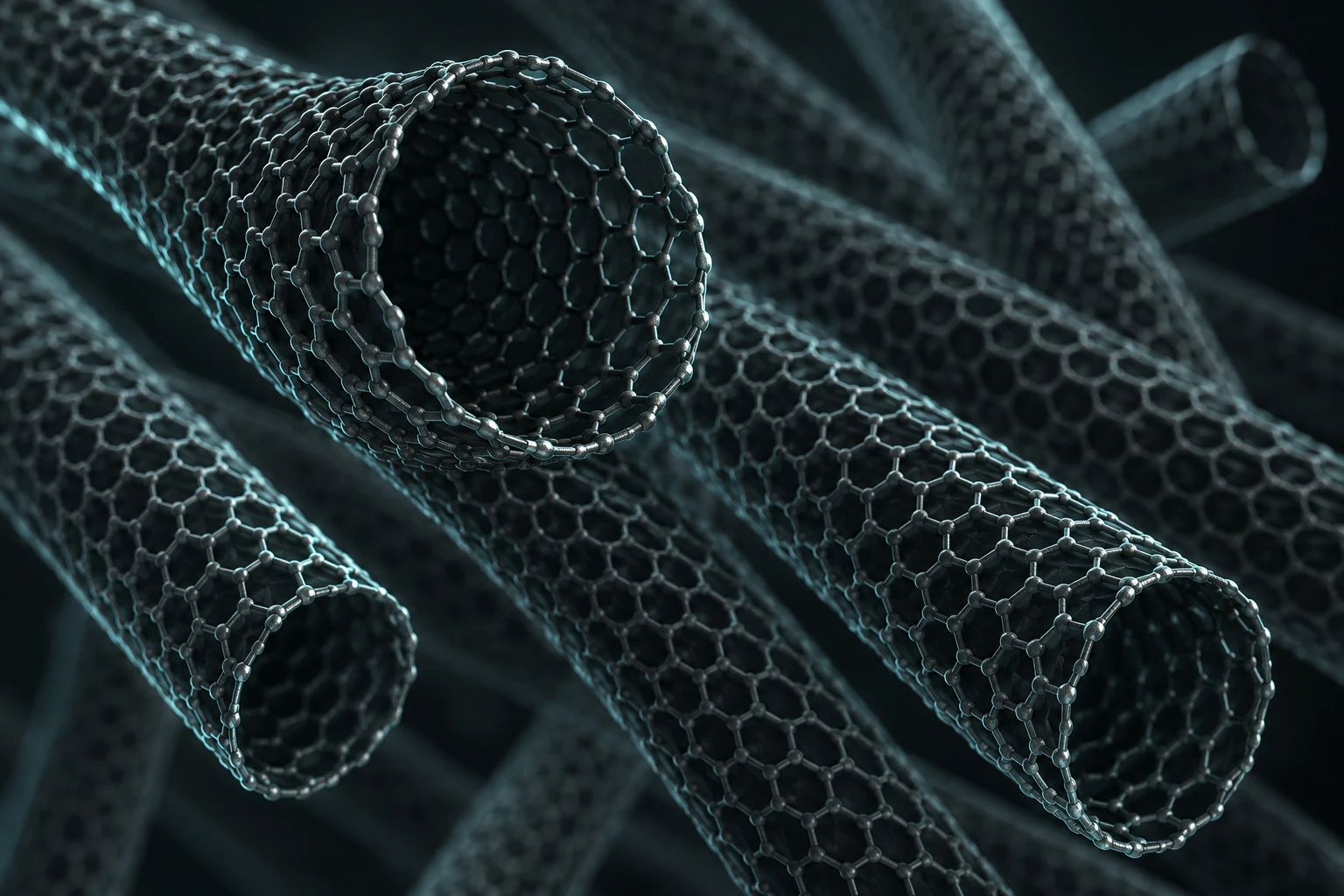
Conceptual illustration of hollow carbon nanotubes with lattice walls, viewed at an oblique angle.
CONCEPTUAL ILLUSTRATION

Carbon nanotubes

ADVANCED MATERIALS RESEARCH

More function. Less mass.

Exploring carbon-based materials, aerogels, and nanocomposites with the goal of combining low mass with useful thermal, electrical, or structural behavior.

AEROSPACE DEVELOPMENT DIRECTION

From a material to working hardware.

Developing toward protective coatings, components, and subsystems that connect materials innovation with the requirements of an aerospace application.

LONG-TERM PROPULSION RESEARCH

Precision mobility for small spacecraft.

Investigating carbon-nanotube and aerogel electrospray concepts, ionic-liquid propulsion, and emitter architectures for future spacecraft maneuvering.

These research areas are under development. Performance and readiness require application-specific testing; propulsion concepts are not flight-qualified product offerings.

04 / WORKING TOGETHER

A clear scope.
A useful next step.

You can begin with one unresolved issue. The first conversation establishes technical fit and the information needed to propose the work.

01

Talk through the problem.

Drew reviews your inquiry and coordinates the initial discussion. We cover the issue, operating environment, existing information, and the decision or milestone you need to reach.

YOU LEAVE WITHA shared problem statement and the next information needed
02

Agree on the assignment.

We propose the work, name the technical lead, and identify deliverables, schedule, commercial terms, and any external laboratory involvement.

BEFORE WORK BEGINSA defined scope, responsibilities, and acceptance criteria
03

Review the evidence.

We walk through findings, recommendations, and limitations against the agreed scope. You decide how to proceed with a record of the work and remaining questions.

AT THE REVIEWThe agreed deliverables and a documented path forward

Know who is doing the work.

DeltaX coordinates the engineering assignment. The proposal identifies the people responsible for it and the facilities needed to complete it.

Specialized testing is scoped with external laboratories when required. Laboratory services, engineering analysis, and qualification decisions are distinguished in the project plan.

05 / THIS IS DELTAX

Built around the connection
between materials and missions.

A Tulsa company with an aerospace horizon.

Founded by Drew Sellers, DeltaX brings together experience in aerospace flight software, engineering operations, and materials research. We work where material behavior meets the demands of an entire system.

Our purpose is to help create more capable hardware and advance the materials and technologies behind future missions. Today that means focused customer engineering and materials research, with a longer-term direction toward proprietary materials, aerospace components, subsystems, and propulsion.

Meet the team

LEADERSHIP & RESEARCH

The people behind DeltaX.

Drew Sellers

Founder & Chief Executive Officer

Drew Sellers

Drew brings more than 15 years of experience developing mission-critical systems to DeltaX, connecting aerospace engineering, advanced materials, and company building.

Full biography

As CEO, co-founder, and lead engineer, Drew guides DeltaX’s engineering work and research into carbon-aerogel electrospray propulsion for small spacecraft. He also leads Edisonian, an AI-driven materials science platform focused on how advanced materials are discovered, designed, and brought to market.

Before founding these ventures, Drew led flight software teams at NASA, working on the reliability and performance of aerospace missions. That experience informs his approach to engineering rigor, technical execution, and materials development.

His work centers on turning ambitious technical ideas into practical programs and companies that expand what aerospace systems and materials can do.

Michael Vercio

Partner, Operations

Michael Vercio

Michael brings aerospace leadership and experience in aerodynamics, aircraft design, and engineering systems to DeltaX’s operations and strategic development.

Full biography

Michael has held leadership roles at FlightSafety International and Textron Aviation, overseeing engineering initiatives and product support programs. His background combines technical depth with operational and business experience.

He also founded TransAtlantic Economics & Analytics, applying his analytical and entrepreneurial experience to economic and engineering challenges.

Michael holds a master’s degree in Economics and a bachelor’s degree in Mechanical Engineering. He began his career working on submarine systems at Puget Sound Naval Shipyard, building a foundation in precision, safety, and complex systems engineering.

Janee Sellers

Chief Strategy Officer

Janee Sellers

A founding member and acting Chief Strategy Officer, Janee connects technical development with business strategy and operational execution at DeltaX.

Full biography

Janee is a co-inventor of DeltaX’s carbon-aerogel electrospray thruster concept and has been closely involved in the development of the company’s core technology. Her work helps shape DeltaX’s approach to propulsion research for small spacecraft and CubeSats.

She has represented DeltaX at industry and government-focused initiatives, including the Tulsa Bootcamp, presenting the company’s vision to aerospace professionals and government stakeholders.

Before co-founding DeltaX, Janee completed a business program at Globe Business College in Germany, developing a foundation in strategy and international operations. She combines that perspective with materials science experience and an interest in creating opportunities for young innovators in emerging technologies and space exploration.

Dr. Matthew Bamidele

Founding Research Scientist

Matthew Bamidele, Ph.D.

Matthew is a materials scientist and engineer whose work spans advanced materials design, characterization, and sustainable energy technologies. He leads DeltaX’s materials research.

Full biography

At DeltaX, Matthew focuses on carbon-aerogel emitters and nanostructured composites for electrospray propulsion research, including fabrication methods, emitter longevity, and propulsion efficiency.

He earned his Ph.D. in Materials Science and Engineering at Oklahoma State University, researching halide perovskite solar cells. His work explored stability through compositional engineering, surface passivation, and lead-free formulations.

His broader research includes radiation-hardened electronics, thin-film semiconductors, and materials characterization, with support in part from NASA’s EPSCoR program. He has also worked on collaborative materials optimization projects for space-relevant conditions.

Matthew holds a B.Sc. in Chemistry from the University of Ibadan and an M.Sc. in Chemistry from Oklahoma State University. His earlier teaching and research roles covered surface chemistry, protein biophysics, and chemometrics.

06 / START WITH THE PROBLEM

What do you want
to make possible?

A new concept, a demanding requirement, or a challenge holding your program back—a short, non-confidential overview is enough to start. Drew reviews your inquiry and coordinates the technical discussion.

Email Drew about your project drew.sellers@deltaxpropulsion.com

Tulsa, Oklahoma, USA

HELP US UNDERSTAND THE ASSIGNMENT

  1. What are you developing or resolving?

    The hardware, material opportunity, or technical challenge you want to explore.

  2. What do you know so far?

    Existing test findings, design constraints, or approaches already considered.

  3. What decision or milestone is next?

    Your timeline and the outcome you need the engineering work to support.

What happens next

We discuss technical fit, identify any additional information needed, and determine whether a scoped proposal is the right next step.